Automated database maintenance and optimization suite
HCL Workload Automation includes a robust Database Maintenance Suite designed to automate the lifecycle management of data storage and query performance. By implementing systematic Table Reorganization and Statistical Sampling, the system ensures that the underlying RDBMS operates at peak efficiency.
The suite targets all critical application schemas, including Model (MDL), Event (EVT), Planning (PLN), and Dynamic Workload Broker (DWB), ensuring comprehensive coverage across all functional modules.
Elevate your operational efficiency by using pre-configured maintenance scripts. These tools provide a robust solution for managing the health of your data layer, ensuring that your environment remains optimized for high-demand workloads.
By automating routine maintenance, you can reduce manual intervention and focus on core business logic.
- Deep fragmentation clean-up
- Utilizes high-level maintenance commands to resolve table bloat and reclaim unused disk space, significantly reducing the storage footprint.
- Heuristic statistics update
- Refreshes internal data distribution metadata, providing the Query Optimizer with the necessary insights to select the most efficient access paths for complex joins and filters.
- Schema-wide coverage
- Systematically processes over 100 core tables to prevent performance bottlenecks in high-concurrency environments.
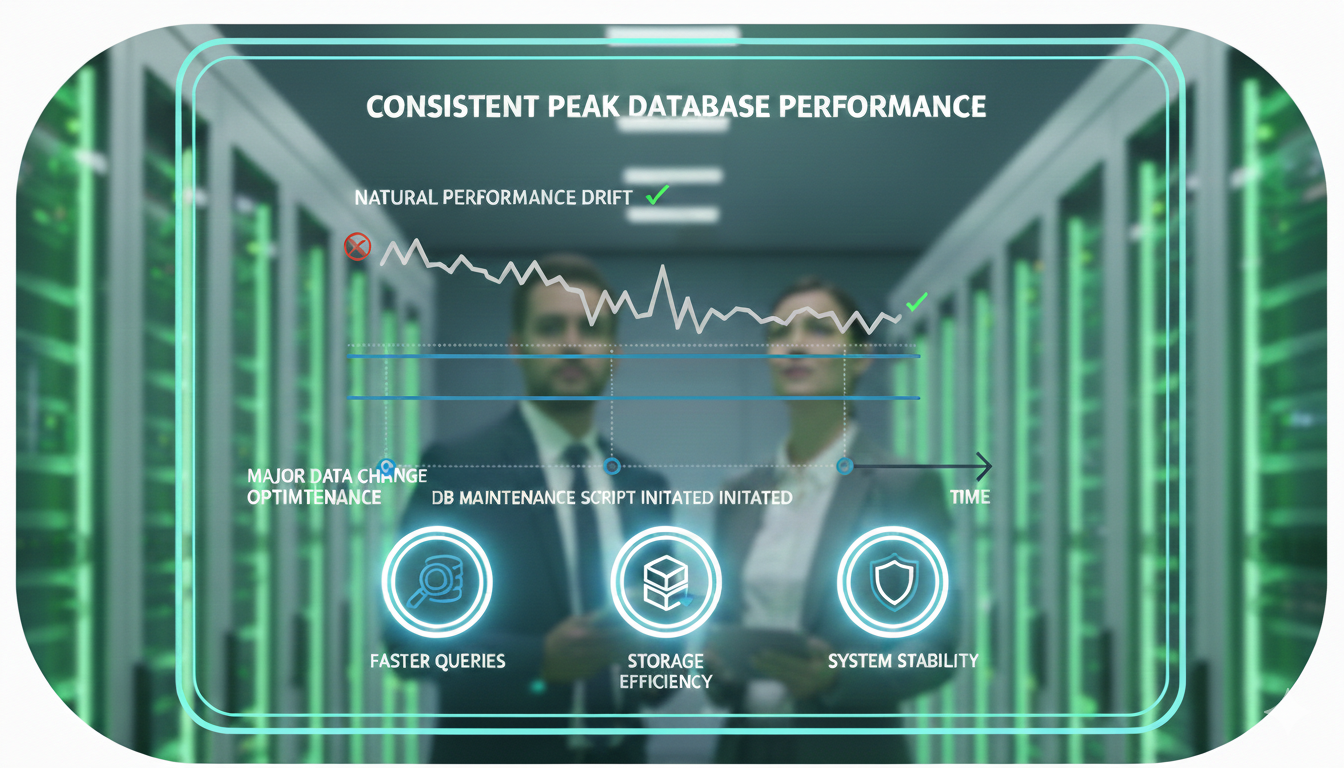 |
Consistent peak performance: Removes the natural performance drift over time, ensuring that end-user interactions and batch processing remain fast and responsive. |
| Storage efficiency: Prevents unnecessary infrastructure costs by maintaining a compact database size and reclaiming storage from deleted or legacy records. | 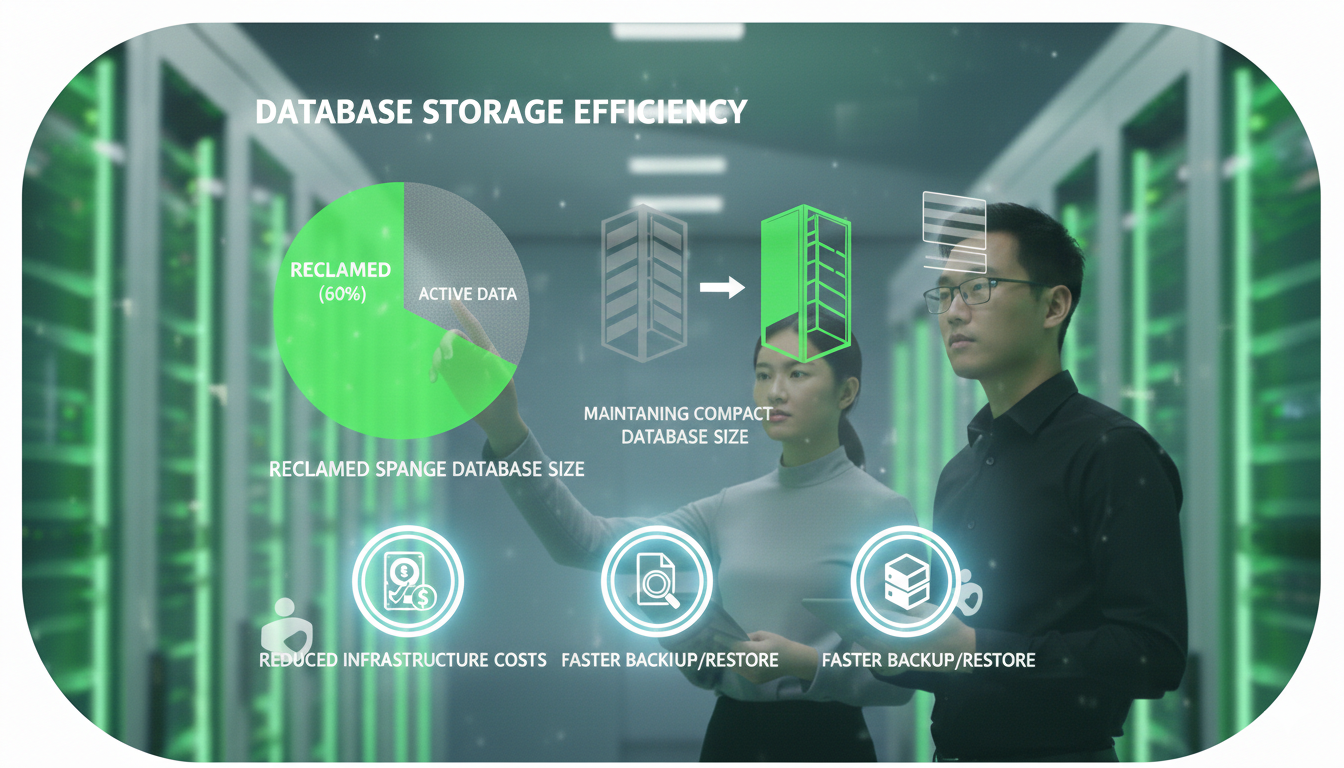 |
 |
Scalability ready: Prepares the environment for increased data volumes, making the application more resilient as your business grows. |