
Canonical Model Architecture
Three-Layer Implementation with Metadata as Core
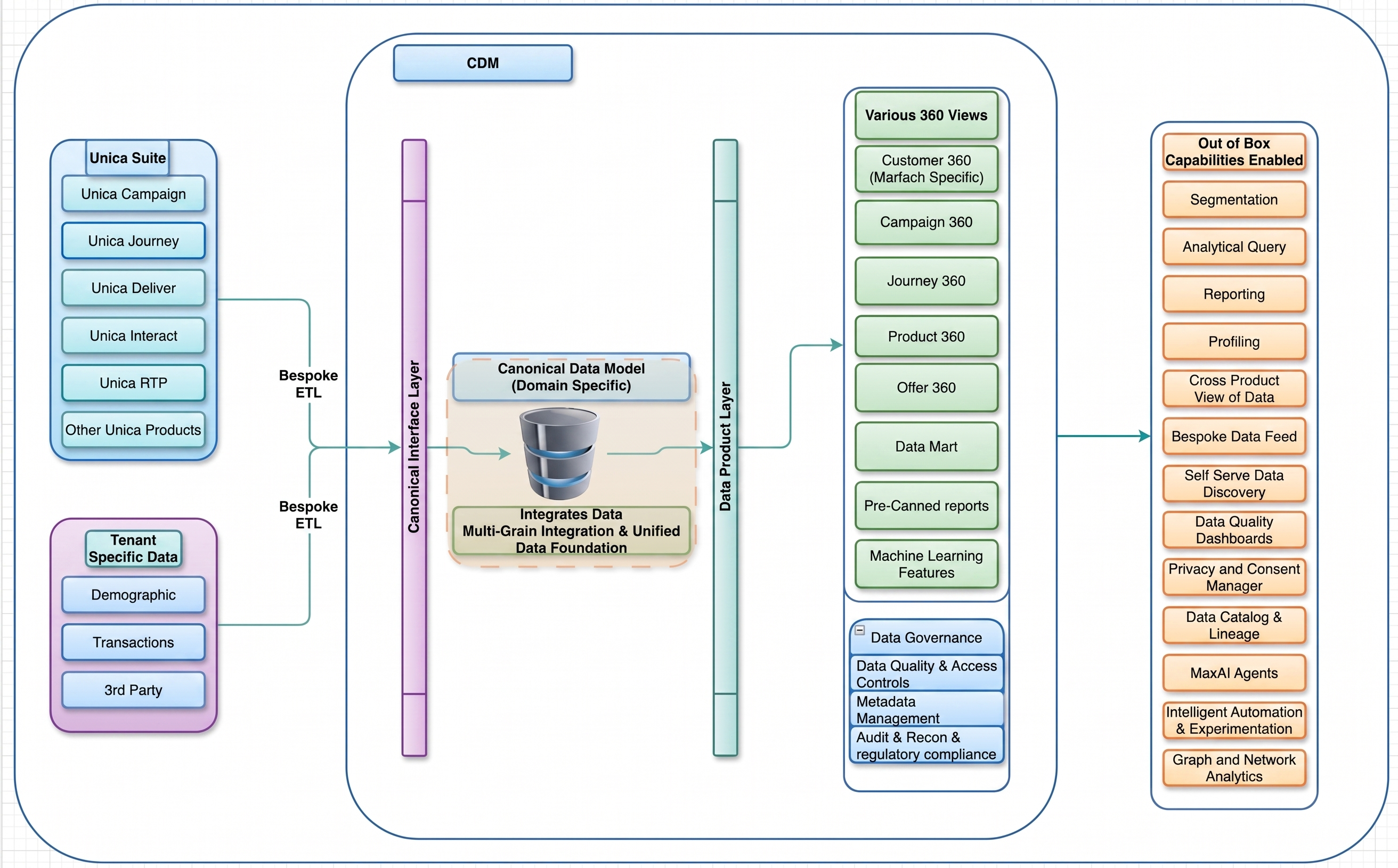
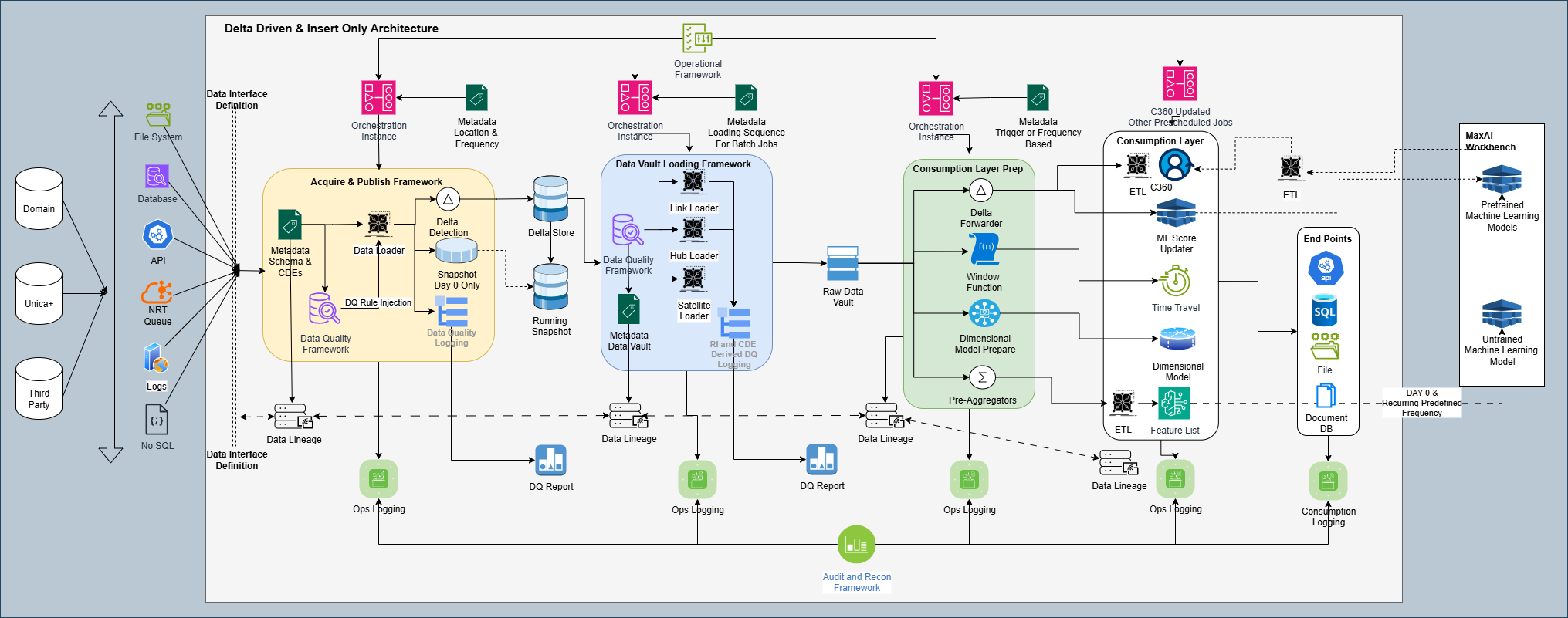
The Canonical Model is implemented across three distinct layers, each serving a specific purpose in the data pipeline. However, the Metadata Model is the CORE that drives integration, ETL automation, data quality, and lineage across all three layers.
Key benefits of Canonical Approach
- Metadata-Driven Evolution: New attributes, entities, or relationships can be added without changing physical schemas. The Metadata Model drives all changes, enabling dynamic schema evolution across the three-layer architecture. Each entity, attribute, and relationship is defined in metadata tables, enabling dynamic schema evolution.
- Multi-layer implementation: Deployed across Landing Zone (LDZ), RAW Data Vault (RDV), and integrated with CDM through a metadata-driven core.
- Pipeline Orchestration Framework: To support scalable execution across the Canonical Data Model architecture, introduces a standardized Airflow-based orchestration framework. The framework consists of a Grandmaster DAG, phase-level Master DAGs, and execution-level Leaf DAGs that coordinate processing across LDZ, RDV, Audience Resolution, Aggregate Layer, Unica 360, and ML integration components. This orchestration framework provides dependency management, execution sequencing, incremental processing support, and consistent operational behavior across supported deployment platforms.
The Three-Layer Architecture
Layer 1: Landing Zone (LDZ) - Staging Layer
First ingestion point for raw data from source systems. Captures data in its original form with minimal transformation, serving as the foundation for CDC (Change Data Capture) tracking.
- Schema: dev_ldz (or prod_ldz, test_ldz)
- Stores raw data exactly as received from source systems
- Minimal data transformation only
- Preserves business keys for tracking and reconciliation
- This layer does not maintain any historical data
Layer 2: RAW Data Vault (RDV)/Business Data Vault (BDV) - Data Vault 2.0 Layer
Transforms landing zone data into Data Vault 2.0 structures (Hubs, Links, Satellites, Link-Satellites). Implements the canonical model in its physical form.
- Schema: RAW Data Vault schema (typically dev_rdv, prod_rdv, etc.)
- Implements Data Vault 2.0 principles for scalability and auditability
- Central repository for all canonical entities evolving across subject areas
- Audience Resolution: To support multi-level campaign execution and ensure a
consistent customer-centric analytical view. The Canonical Model introduces an
Audience Resolution Layer within the BDV → Unica 360 transition. This layer
standardizes how campaign participation across multiple audience levels
(customer, account, device) is resolved into a unified customer
identifier.
Key Components:
- Audience_map table: Defines mapping rules to resolve different audience types into a canonical customer identifier
- Campaign–Offer–Channel–Product Bridge: Captures valid combinations of campaign execution relationships
- Resolution Logic: Applies metadata-driven rules to map campaign participation to customer-level records
Purpose:
- Enables consistent Customer 360 aggregation regardless of campaign execution grain
- Eliminates ambiguity in downstream analytics and ML feature generation
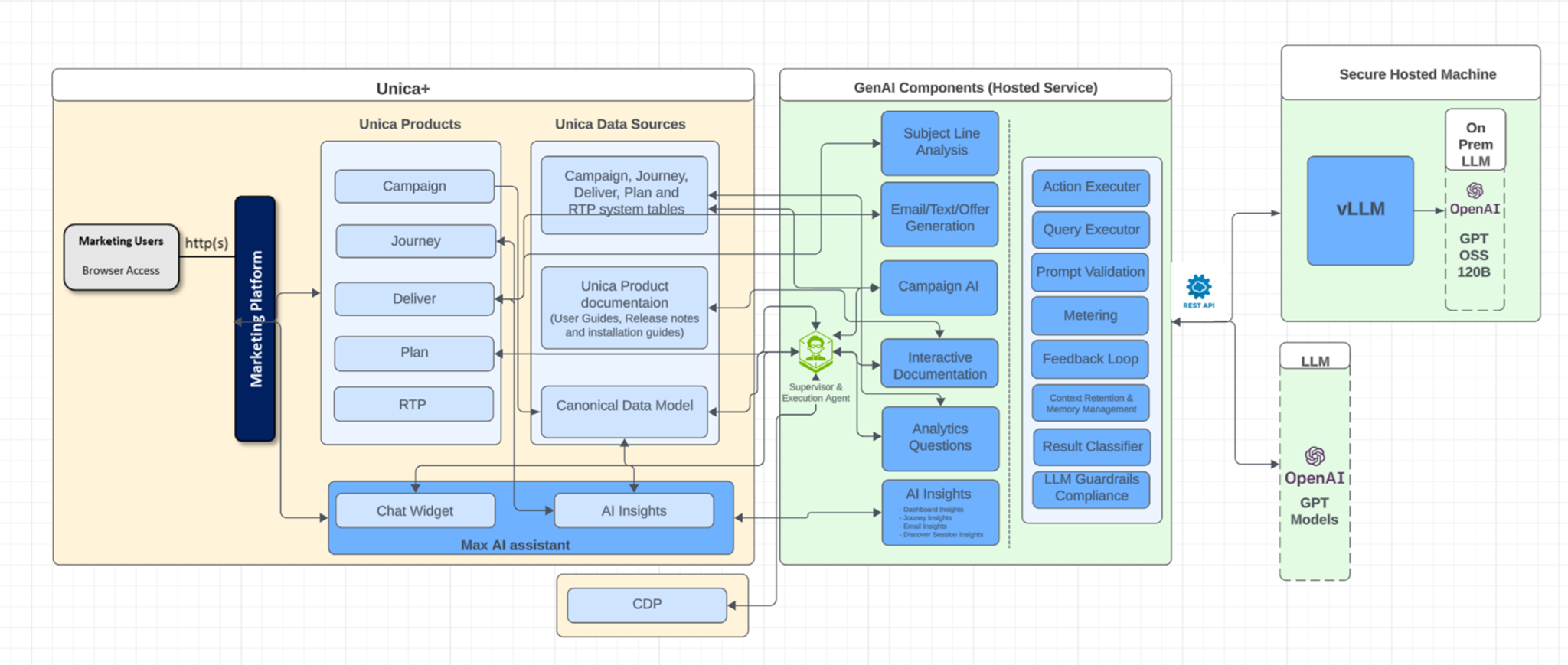
- Ensures AI models and MaxAI queries operate on a unified customer-level dataset. This layer is metadata-driven and integrates tightly with ETL pipelines and aggregate processing.
Layer 3: Unica 360 -- Customer Experience Intelligence Layer
Unica 360 provides unified customer intelligence through domain-specific 360-degree views. This layer transforms RDV data into business-ready insights, enabling precise, contextual, and personalized customer experiences.
Aggregate Layer
A pre-computed Aggregate Layer is introduced within the Unica 360 layer to optimize Campaign 360, Customer 360 and Flowchart 360 processing. This layer consumes canonical (RDV-derived) snapshot data and produces pre-aggregated metrics.
- Eliminates direct BDV snapshot reads from 360 models
- Supports incremental processing (daily delta loads)
- Enables rolling window metrics (7d, 30d, 90d) for Customer 360
- Improves performance and scalability of analytical queries
- Customer 360: Demographic, Consents, Behavior, Financial, Product
- Campaign 360: Performance metrics
- Flowchart 360: Execution tracking, performance metrics