Deploying CDP Redis Cluster
This section provides detailed instructions on how to deploy HCL CDP Redis Cluster using the Devtron in the AWS..
Deploying CDP Redis Cluster
To deploy the CDP Redis Cluster , follow the steps below:
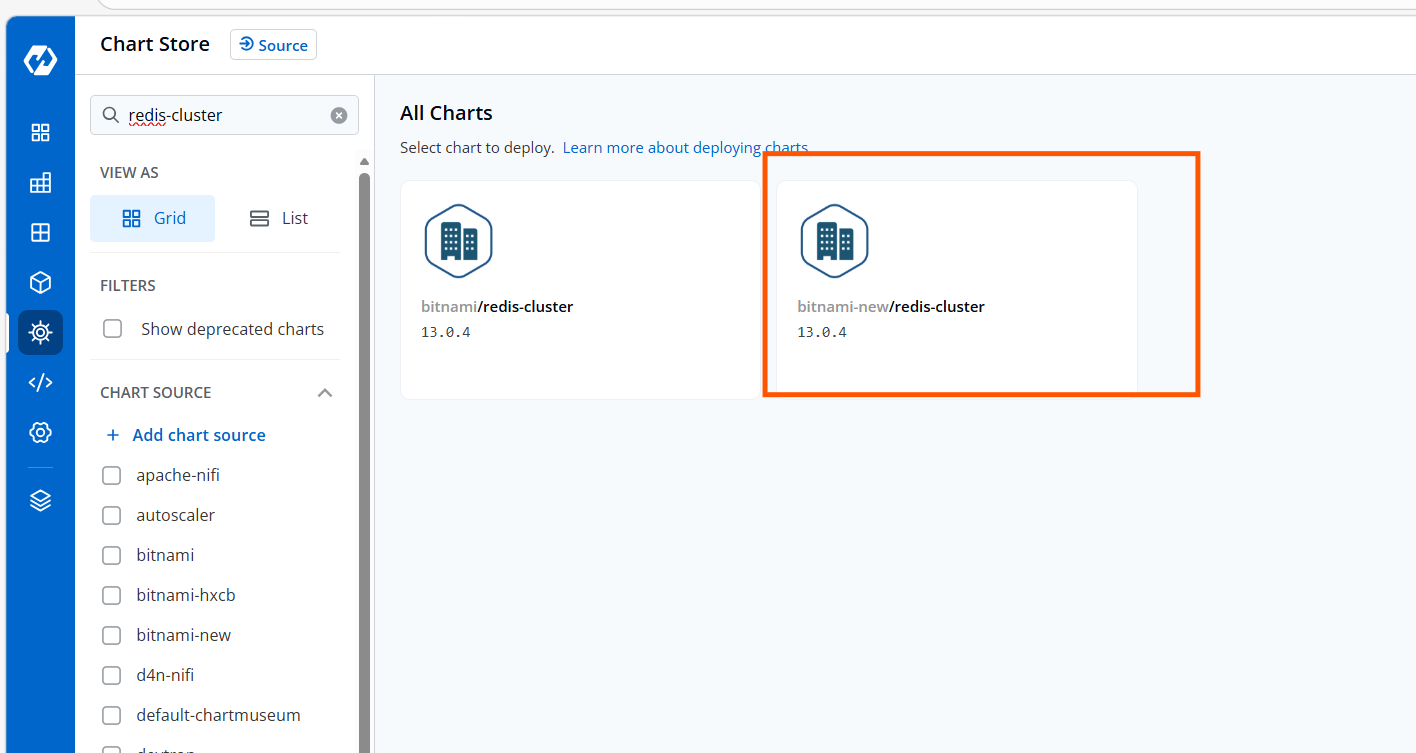
- Navigate to the Devtron Chart Store, and select the redis-cluster chart to deploy.
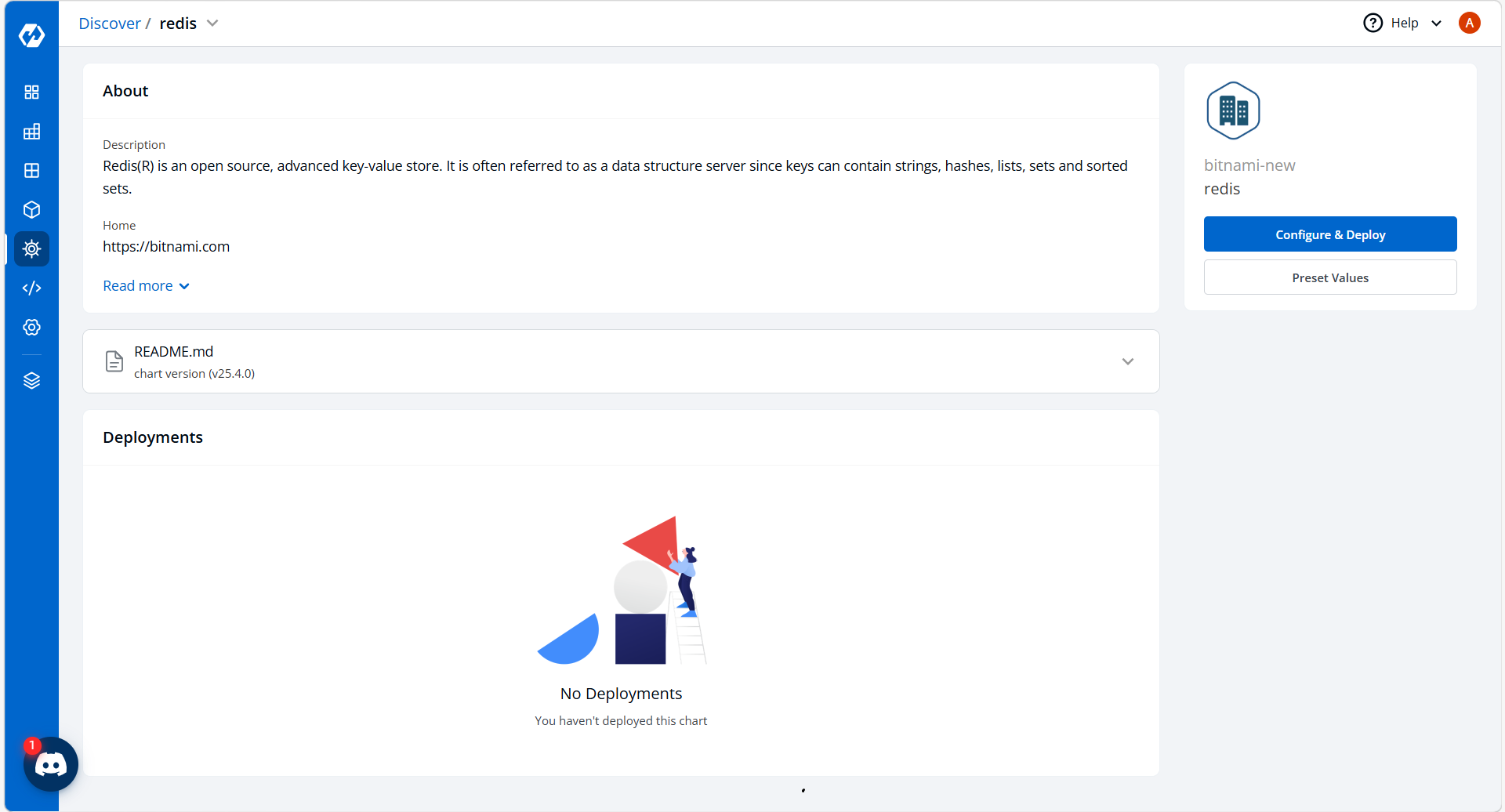
- Now, configure and deploy the charts.
- In the YAML section, update the configure section with correct details and deploy
the charts.
global:
  imageRegistry: ""
  imagePullSecrets: []
  defaultStorageClass: ""
  storageClass: ""

security:
  allowInsecureImages: false

redis:
  password: "YourRedisPasswordHere"

compatibility:
  openshift:
    adaptSecurityContext: auto

nameOverride: ""
fullnameOverride: ""
namespaceOverride: ""
clusterDomain: cluster.local
commonAnnotations: {}
commonLabels: {}

# --- Redis UI & Shared ALB Ingress ---
extraDeploy:
  - apiVersion: apps/v1
    kind: Deployment
    metadata:
      name: redis-commander
    spec:
      replicas: 1
      selector:
        matchLabels:
          app: redis-commander
      template:
        metadata:
          labels:
            app: redis-commander
        spec:
          containers:
            - name: redis-commander
              image: rediscommander/redis-commander:latest
              env:
                - name: REDIS_HOSTS
                  value: "cluster:dmp-sst-redis-redis-cluster:6379:0:YourRedisPasswordHere"
                - name: IS_CLUSTER
                  value: "true"
              ports:
                - containerPort: 8081

  - apiVersion: v1
    kind: Service
    metadata:
      name: redis-commander-svc
    spec:
      type: ClusterIP
      ports:
        - port: 80
          targetPort: 8081
      selector:
        app: redis-commander

  - apiVersion: networking.k8s.io/v1
    kind: Ingress
    metadata:
      name: redis-ui-ingress
      annotations:
        alb.ingress.kubernetes.io/group.name: ""
        alb.ingress.kubernetes.io/scheme: internet-facing
        alb.ingress.kubernetes.io/target-type: ip
        alb.ingress.kubernetes.io/certificate-arn: ""
        alb.ingress.kubernetes.io/listen-ports: '[{"HTTP": 80}, {"HTTPS": 443}]'
        alb.ingress.kubernetes.io/ssl-redirect: "443"
        alb.ingress.kubernetes.io/backend-protocol: HTTP
        alb.ingress.kubernetes.io/success-codes: 200-399
    spec:
      ingressClassName: alb
      rules:
        - host: redis.dev.<env-domain>.now.hclsoftware.cloud
          http:
            paths:
              - path: /
                pathType: Prefix
                backend:
                  service:
                    name: redis-commander-svc
                    port:
                      number: 80

image:
  registry: docker.io
  repository: bitnamilegacy/redis-cluster
  tag: 8.2.1-debian-12-r0
  pullPolicy: IfNotPresent

networkPolicy:
  enabled: false
  allowExternal: true

serviceAccount:
  create: false
  name: eks-s3-sa

podSecurityContext:
  enabled: true
  fsGroup: 1001

containerSecurityContext:
  enabled: true
  runAsUser: 1001
  runAsNonRoot: true
  readOnlyRootFilesystem: true

usePassword: true
password: "YourRedisPasswordHere"

service:
  type: ClusterIP
  ports:
    redis: 6379

persistence:
  enabled: true
  size: 8Gi

cluster:
  init: true
  nodes: 6 # Total number of nodes
  replicas: 1 # 3 Masters + 3 Replicas

externalAccess:
  enabled: false

redis:
  useAOFPersistence: "yes"

resourcesPreset: "medium"
podAntiAffinityPreset: soft

metrics:
  enabled: false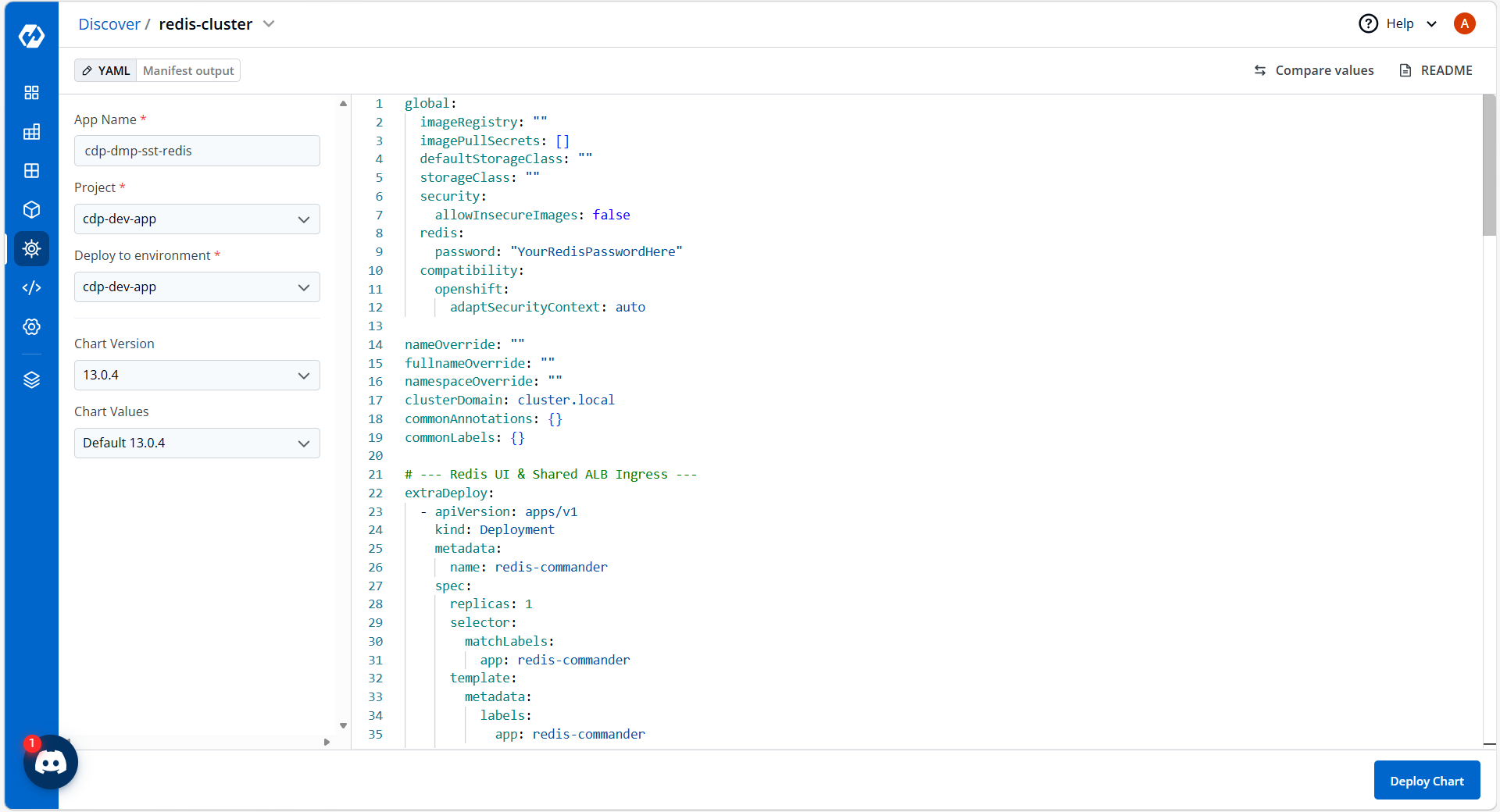
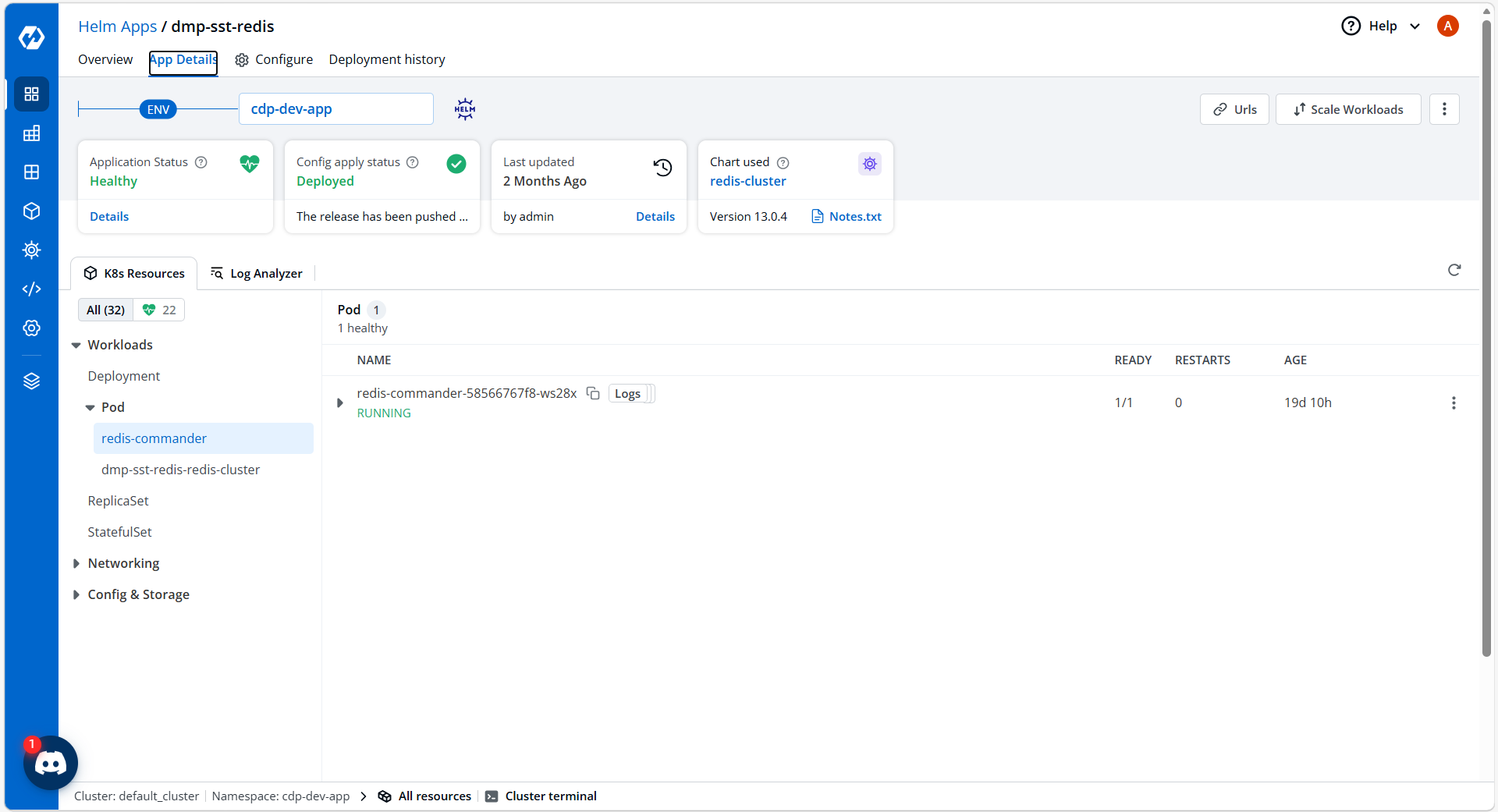
- On successful deployment, validate the deployment as shown below.