
Create Fixlet Stream
The Create Fixlet Stream feature enables you to set up custom Fixlet streams to meet specific organizational needs by defining conditions and selecting targeted devices for updates.
Steps to Create a Fixlet Stream
-
Open the Create Fixlet Stream Widget
- On the Fixlet Streams page, click the Create Fixlet
Steam to open the "Create Fixlet Stream"
widget.
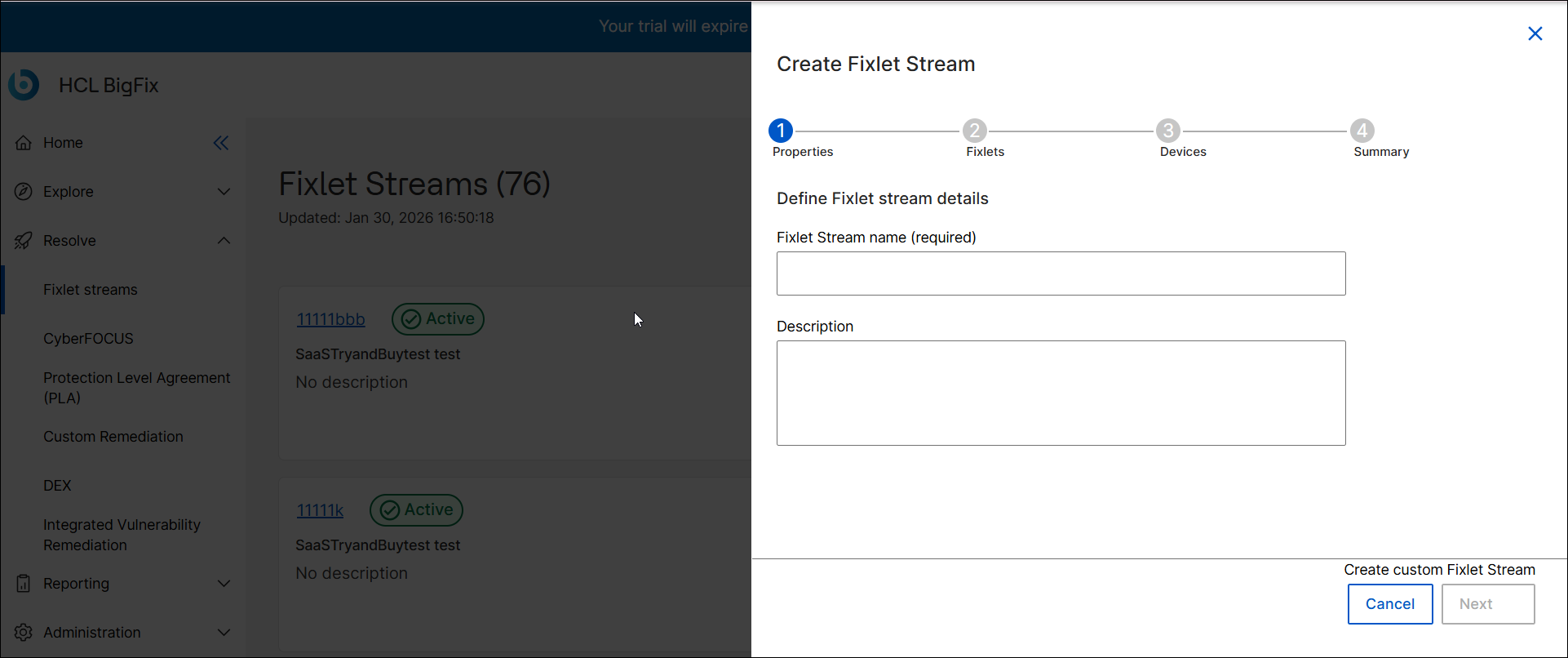
- On the Fixlet Streams page, click the Create Fixlet
Steam to open the "Create Fixlet Stream"
widget.
- Properties: Define the name and description for the Fixlet steam and click Next.
- Fixlets: Select Fixlets for the Fixlet stream by using the conditions.
- Select Fixlet Scope: Mandatory. Click on the Select Fixlet Scope dropdown and choose one or more options including Custom Content or specific operating systems and versions from the available list in the tree view. You can add or remove the selected items.
-
Configure Fixlet Conditions
- Click the Propertydropdown to choose an attribute
and define a condition for the Fixlet stream. For each attribute,
specify a condition and add values. You can define multiple conditions.
The Attribute dropdown dynamically displays the
attributes available to you.
- CVE: Filters Fixlets based on the associated Common Vulnerabilities and Exposures (CVE) ID. Use this property to target specific security vulnerabilities.
- Category: Filters Fixlets by their classification type (for example, Audit, Bug Fix Advisory, Critical Update, Configuration, or Definition Update). Select one or more categories to include only those types of Fixlets in the stream. Use Select all to include all categories or Reset to clear your selection.
- Name: Select the "contains" or "not contains" condition and for the value, enter your string, and click Apply button. This displays all the strings that you have entered.
- Severity: Select the "in" or "not in" condition; for the value, choose the level of severity for the Fixlet stream. Modify selection by adding or removing as required.
- Source: Filters Fixlets based on the content provider or vendor (for example, 7-Zip, 3CX, 8x8, or other supported publishers). Select one or more sources to include only Fixlets published by those vendors in the stream. Use Select all to include all sources or Reset to clear your selection.
- Select the Operator.
- The Value text box dynamically fetches data from
your database for you to select.
- CVE: Add relevant CVEs to the stream by typing them and
click Add.Note:
- To enter multiple CVE entries at once, you can copy paste a list of CVEs separated by comma, semicolon or a space. For example: CVE-123-1234,CVE-123-1256, CVE-123-1278
- View All button is displayed when there are more than eight CVE values. Click the View All button to view the list in detail, review, search, or remove a specific CVE.
- CVE: Add relevant CVEs to the stream by typing them and
click Add.
- Click Apply. The system evaluates the criteria and identifies matching Fixlets.
- Review the Preview selected Fixlets section to confirm that the expected Fixlets are included.
- Once the conditions are defined, click Next to proceed.
- Click the Propertydropdown to choose an attribute
and define a condition for the Fixlet stream. For each attribute,
specify a condition and add values. You can define multiple conditions.
The Attribute dropdown dynamically displays the
attributes available to you.
-
Devices
- Define device filters by selecting attributes, conditions, and values to determine which devices need to be included in the Fixlet stream.
- Click Next to continue.
-
Review Summary and Create
- The Summary page displays all the details that you have configured for your Fixlet stream.
- Provide a meaningful name for your Fixlet stream, review the summary, and click Create.
- Upon creation, the custom Fixlet stream appears at the top of your list with the icon Custom Fixlet Stream to distinguish it from built-in Fixlet streams.
-
Edit Fixlet Stream
- To adjust conditions, click on your custom Fixlet stream card to access the Fixlet details page and edit any attribute settings as needed.