Introduction to Commerce Search
Commerce Search includes a data ingest component and the powerful indexing and query services of the Elastic engine. Commerce+ Transaction Server services are SaaS services. In day-to-day operations, they function like internal components of Commerce+ Transaction Server, but when a service is upgraded, its improvements become instantly available to Commerce+ Transaction Server.
.
- Fully integrated with Elastic as the default core search technology.
- Enhanced multilingual support with over 30 built-in language-specific analyzers for text analysis such as tokenization, stemming, stop words.
- Dynamic index shards allow more nodes to be dynamically added and rebalance data automatically across the cluster with zero downtime.
- Hot-swapping of newly-built indexes using index aliases. Re-indexing has minimal impact on your live index cluster.
- Fast incremental snapshots, which allow you to backup at frequent intervals.
- Multitier marketing and features near-realtime updates.
- Kubernetes-ready deployment interface.
- Seamless service upgrade and version control. New features and bug fixes are delivered continuously.
In Commerce+ Transaction Server, you typically only need to administer the Query service. This service builds search expressions and then hands them to the Elastic engine. It also takes the query results and translates them back into a form that can be used by the storefront.
The Docker container stack that runs the microservices uses the Spring Boot framework.
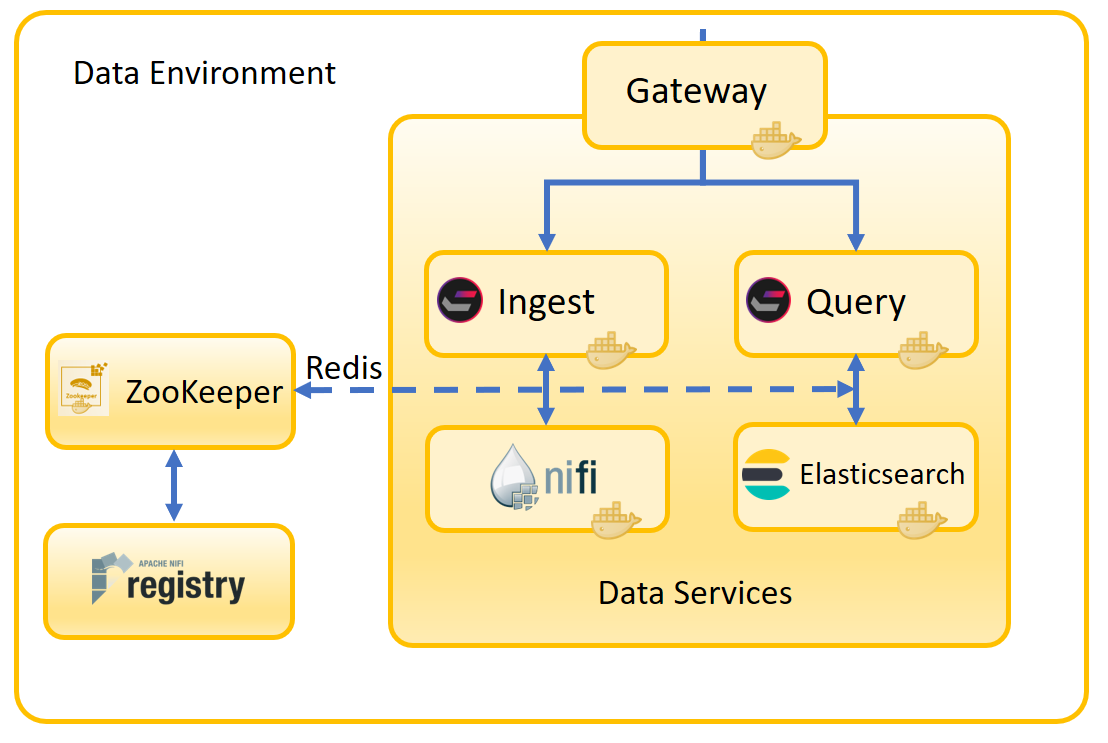
The following diagram shows the architecture of Commerce Search. The microservices in the main box were inside the monolithic Search container in Version 9.0. These services have now been broken out into their own containers and communicate via the Data Environment.