End to End Execution
- Create a new Incident in Service now in iAutomate Assignment group. Fill in the
details as Required. If runbook parameters are not found in the ticket description,
iAutomate will use the default values stored in runbook configuration. The Assignment Group
should be the same as configured in iAutomate.
Figure 1. Creating Incident 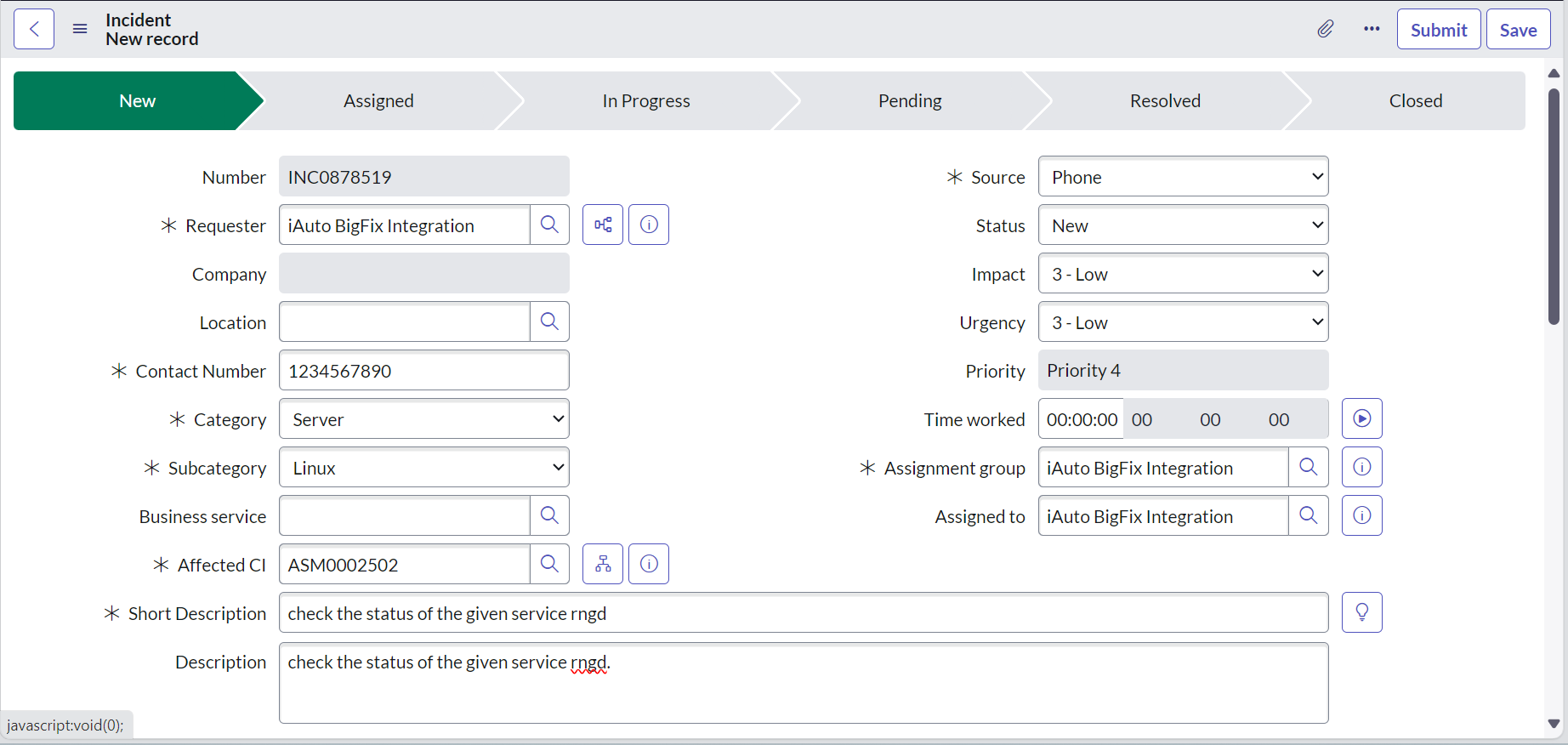
- The tickets will now be collected by iAutomate and added to the queue for
recommendation.
Figure 2. Ticket Added for Recommendation 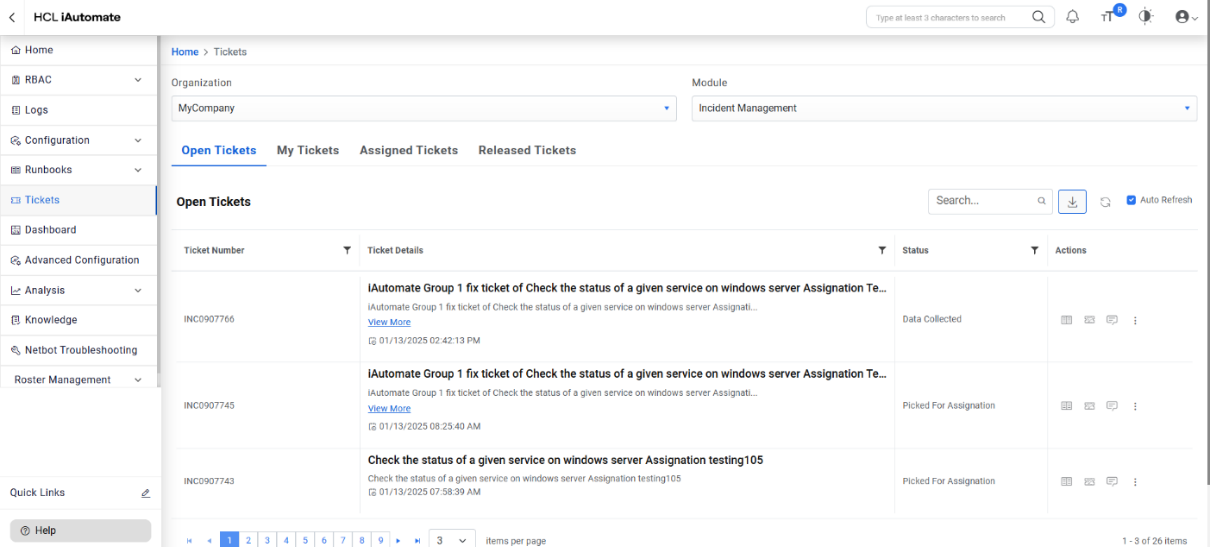
- The Recommended Runbooks which have a confidence score above the threshold will be
displayed when clicking Select Runbook. Select the suitable runbook to execute.
Figure 3. Selecting Runbook 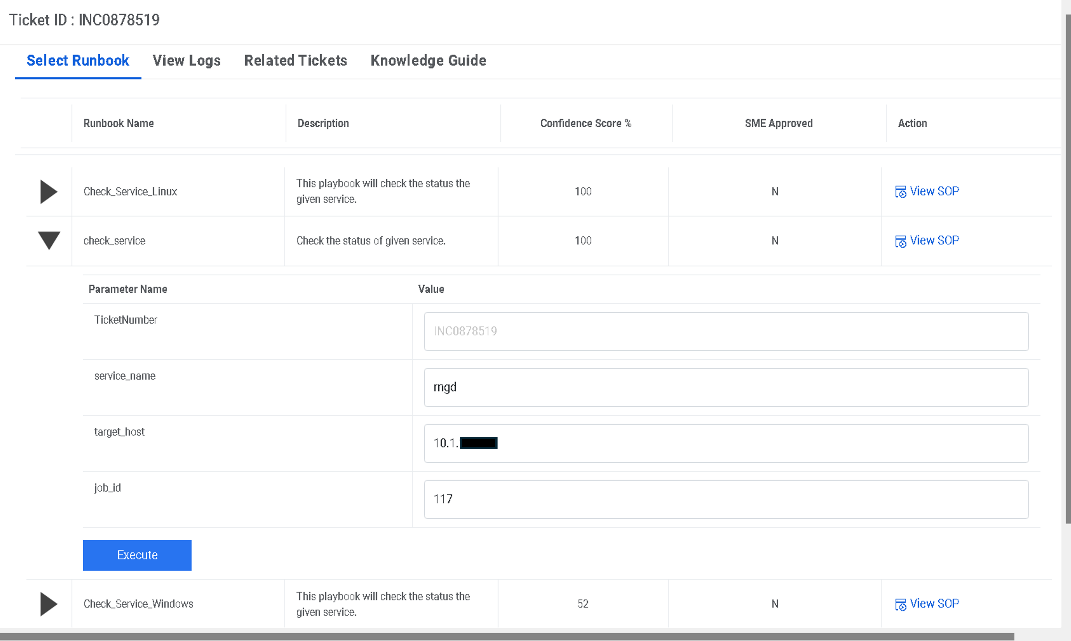
- After selecting the runbook execution will start and the interaction id will be generated
by the Ansible Inside / CLI tool.
Figure 4. Interaction ID Generation by Ansible Inside / CLI Tool 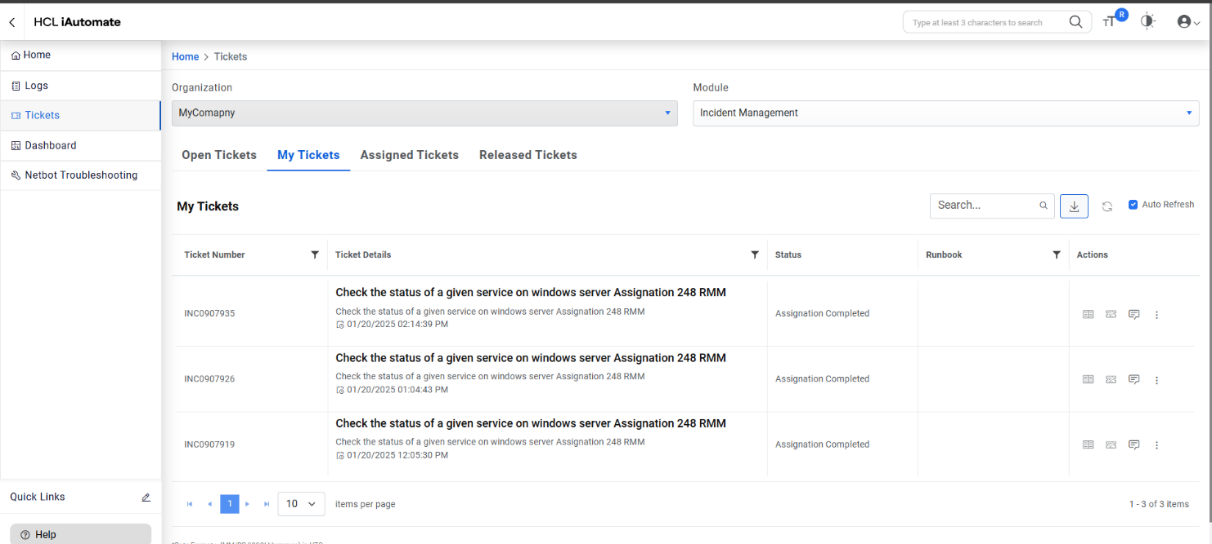
- Check the logs by clicking the log button on the right side of the ticket. The ticket is
now set to InProgress state.
Figure 5. Viewing Logs 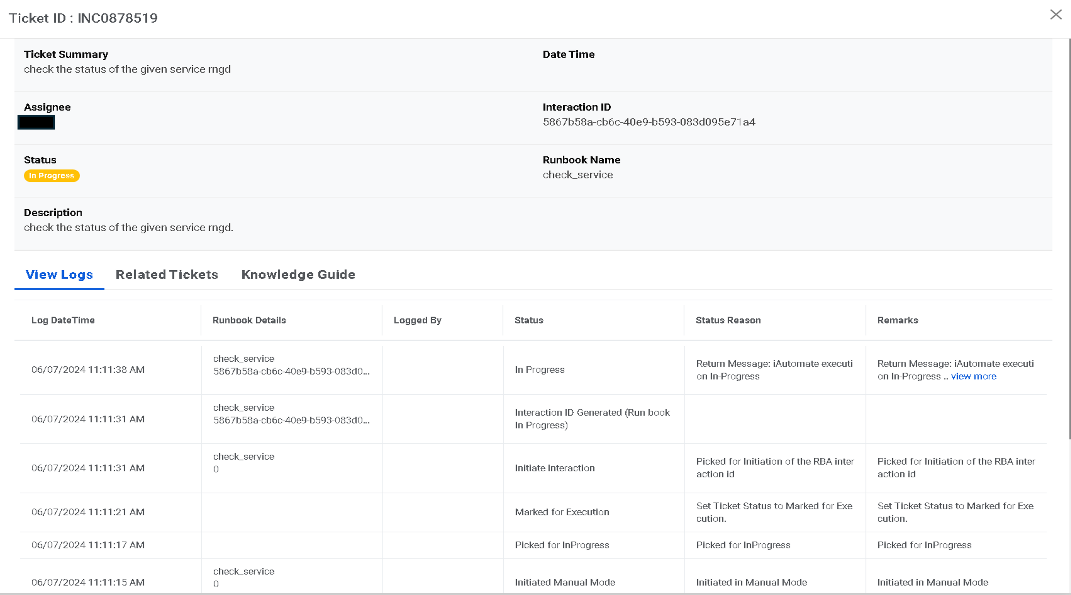
- iAutomate will update the Incident Ticket on ServiceNow to InProgress Mode.
Figure 6. Incident Ticket – In Progress Mode 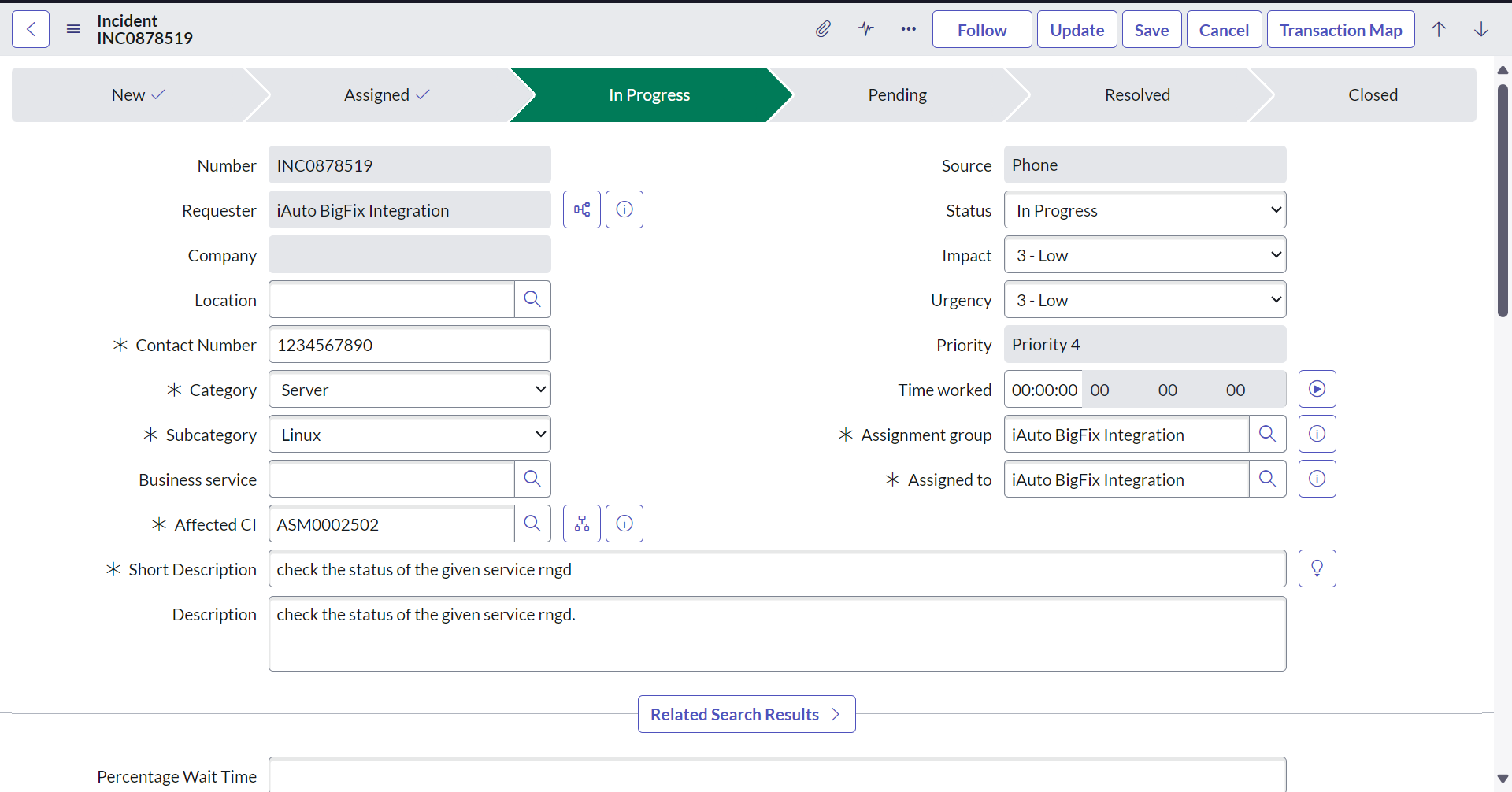
- Work notes will be updated by iAutomate.
Figure 7. Work Notes updated by iAutomate 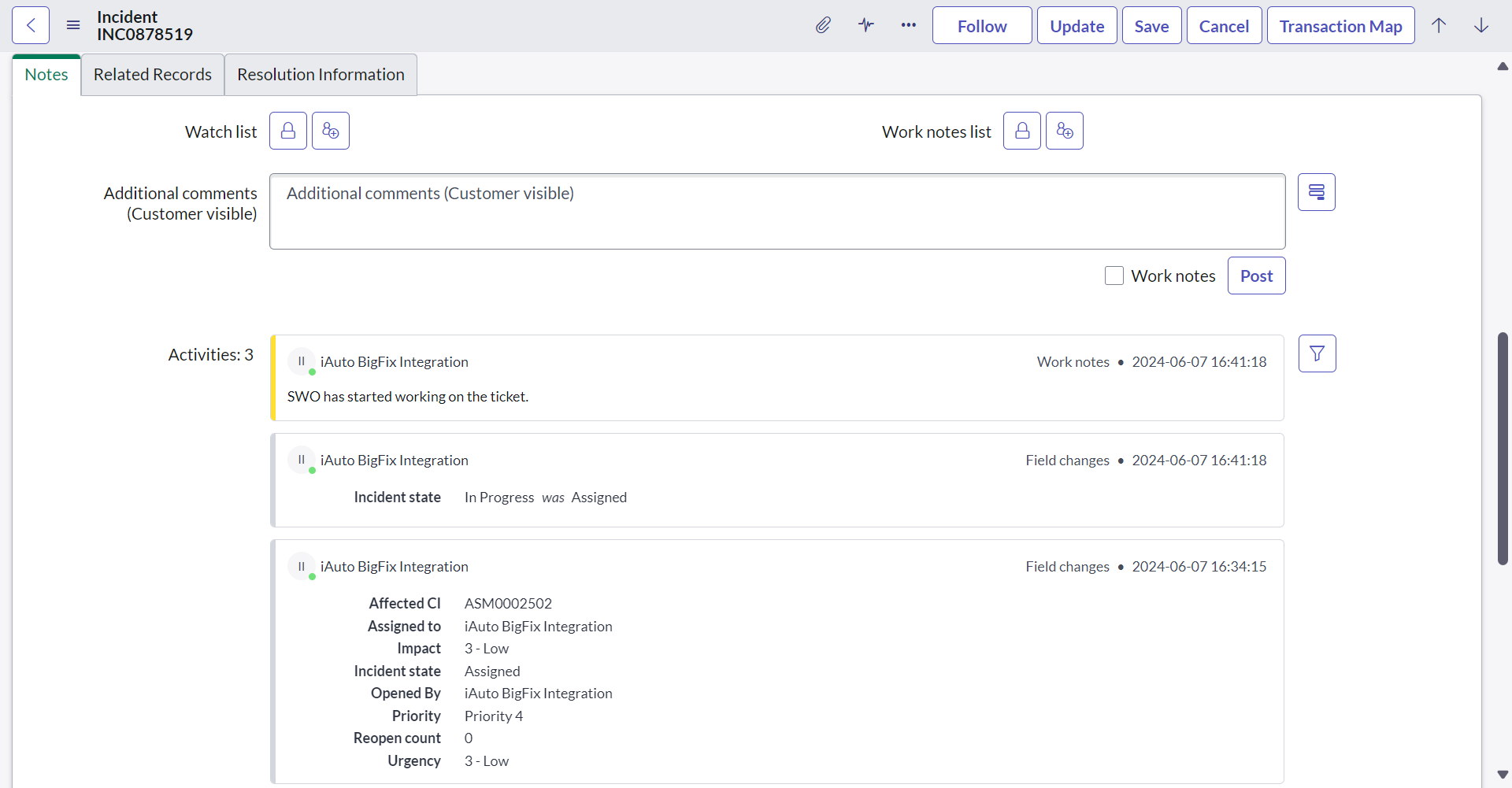
- Check the Ticket logs again to see if the execution is successful.
Figure 8. View Logs 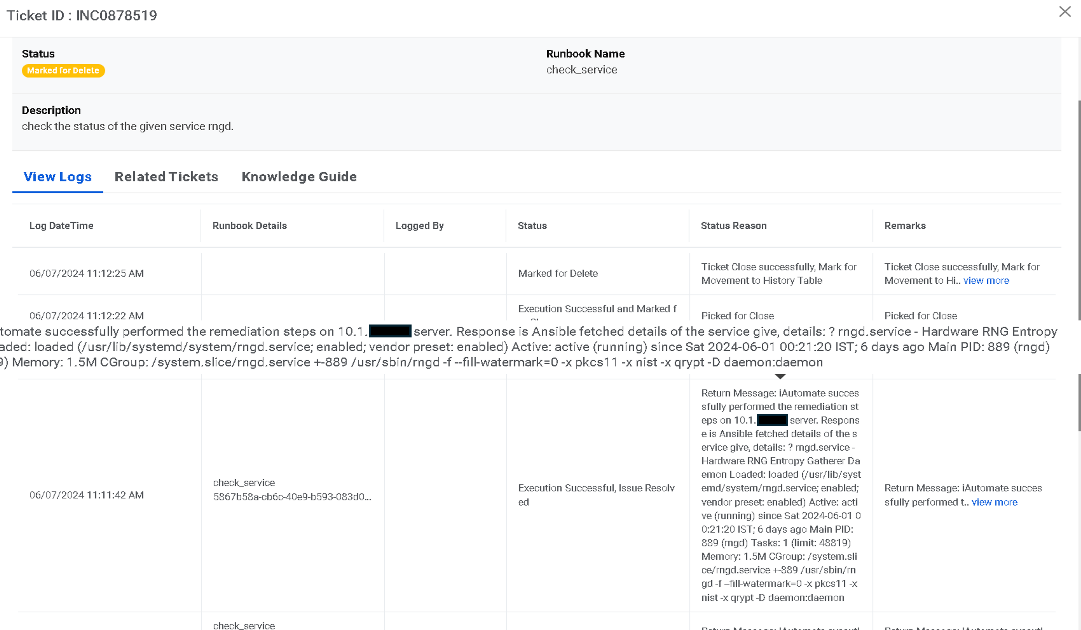
- Tickets are now successfully resolved by iAutomate and the same will be updated on
ServiceNow.
Figure 9. Ticket Status -Resolved 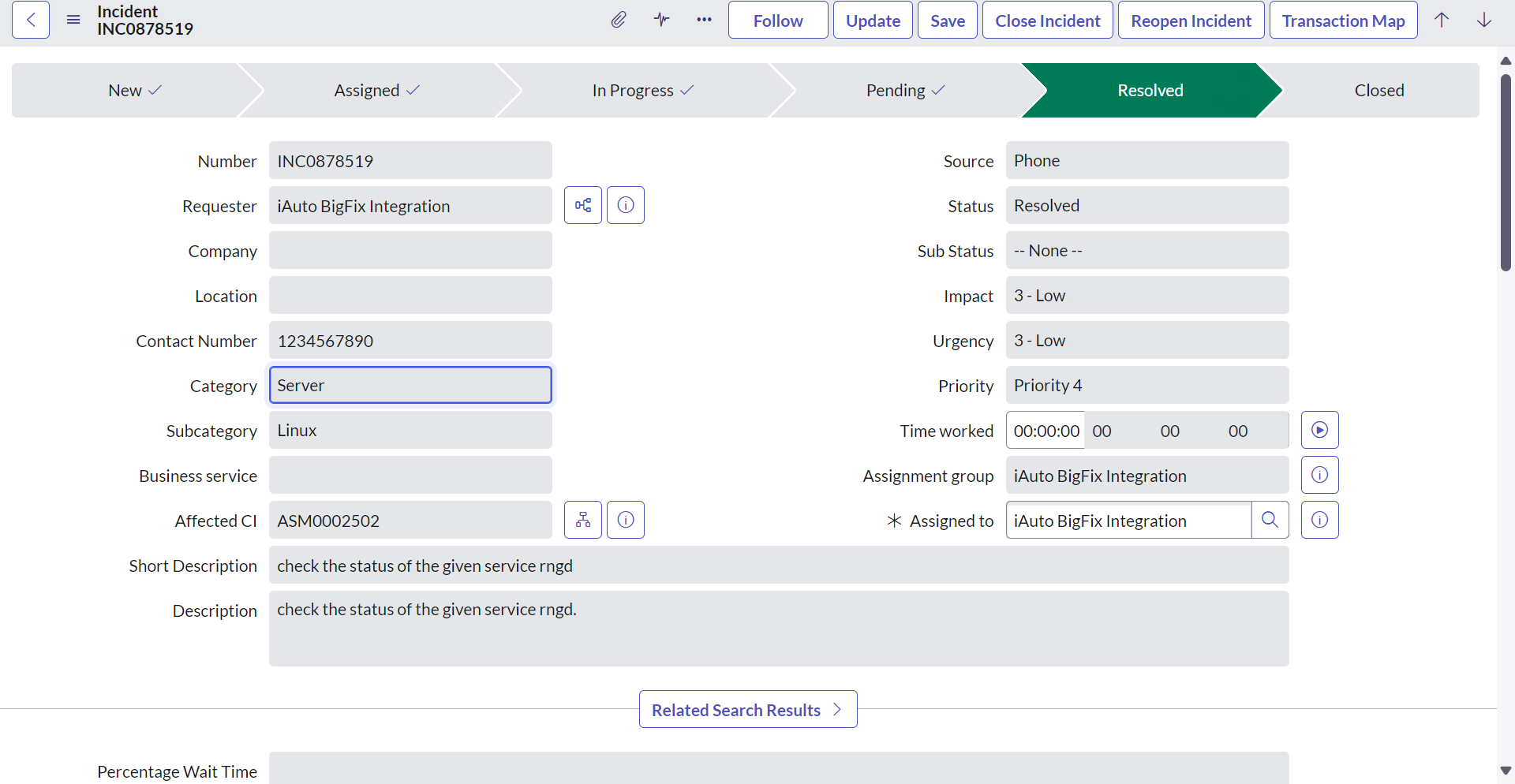
- These final work notes contain the results of Runbook execution in Ansible Inside/CLI RBA
tool.
Figure 10. Final Work Notes 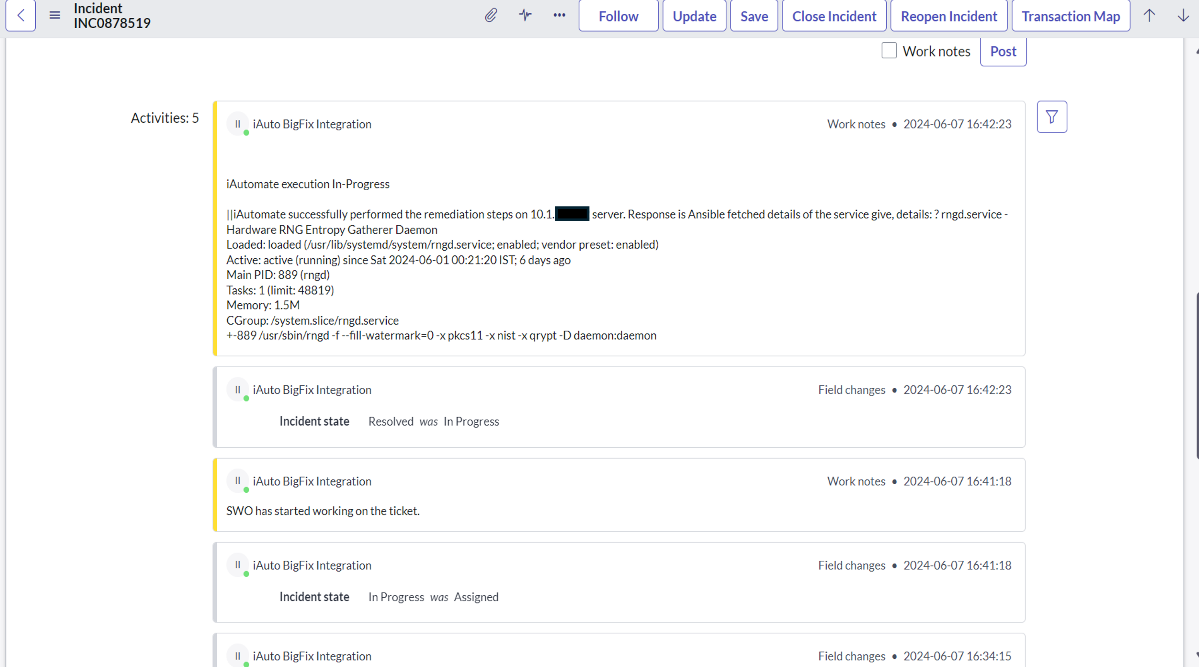
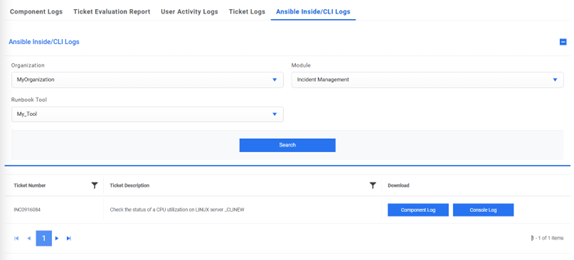
- Finally, Ansible Inside/CLI Logs can be checked in the Logs section of iAutomate.
Figure 11. Ansible Inside / CLI Logs