generates
a log file when you prepare a database for registration and when you
register, upgrade, or unregister a module.
If one of these tasks fails, the log file lists the specific SQL statement
that failed. Log files also list whether the failure was expected
or unexpected, and they show the error generated by the SQL command.
An
example of an expected error is an error issued when a module
contains an SQL statement to create a table, but that table already
exists. When receives
an unexpected error, it halts the operation and returns the database
to its prior state.
Log files are numbered consecutively and
contain a time stamp. You should periodically delete log files to
free disk space.
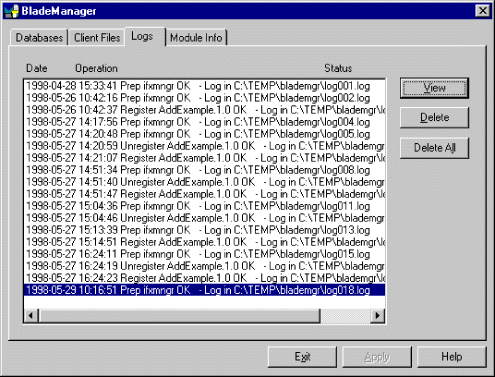
View and delete log files on the Logs page,
as shown in the following figure. Figure 1. Logs page